

 iscover
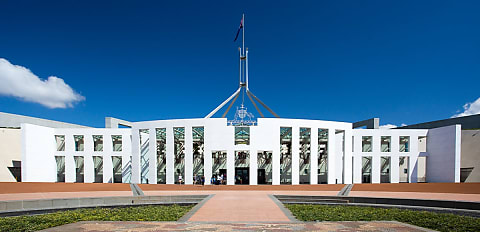

The federal government has pledged an additional $10 billion to boost housing supply for first home buyers, as part of its Mid-Year Economic and Fiscal Outlook (MYEFO) released on Wednesday (17 December).
Under the new First Home Supply Program, the Albanese government will invest $10.0 billion over eight years (starting from 2026–27) to help deliver up to 100,000 new homes reserved for first home buyers.
The funding includes $2.0 billion in grants and $8.0 billion in concessional loans, with state governments expected to contribute a further $2.0 billion in matched funding.
The Treasury said it would partner with states, territories, and industry to unlock land and accelerate construction.
Construction is slated to begin in 2026–27, with buyers expected to start moving into completed homes from 2027–28.
The government outlined that the program is designed to increase the supply of well-located homes and make it easier for first home buyers to enter the market, while supporting the government’s broader target of building 1.2 million new homes by June 2029.
As part of the housing updates, the government will also invest $15.0 million in 2025–26 to improve awareness and accessibility of Commonwealth first home buyer support programs.
The MYEFO confirmed ongoing backing for existing schemes, including the expanded 5 per cent Deposit Scheme (formerly the Home Guarantee Scheme), which is estimated to cost $5.4 million over four years from 2025–26. Since its expansion, the scheme has supported more than 21,000 first home buyers and more than 200,000 buyers since May 2022.

However, the update drew sharp criticism from the Australian Greens, which accused the government of failing to tackle tax concessions that benefit property investors, including negative gearing and the capital gains tax (CGT) discount.
The Greens said MYEFO showed the cost of negative gearing continuing to rise, with losses claimed by property investors expected to total $29.2 billion this financial year (up 18 per cent year on year), stating the policy is worsening housing affordability and crowding out first home buyers.
Greens Leader Senator Larissa Waters said the government was prioritising “handouts for wealthy property investors” during a cost-of-living crisis and added: “Millions of people are doing it tough trying to find a home and keep their heads above water, but Labor is still refusing to tax multimillionaires fairly, to help raise revenue to fund more for housing or essential services.”
Meanwhile, the Greens’ economic spokesperson Senator Nick McKim described the increasing negative gearing benefit as “obscene”, claiming “property speculators” were the “big winners” from Labor’s housing settings.
“This is a slap in the face to ordinary Australians who are working hard and paying tax,” he said.
The party has again called on the government to reform negative gearing and wind back the CGT discount, saying that changes would free up revenue to invest in housing and ease pressure on renters and aspiring home buyers.
Beyond housing, the MYEFO outlined a range of cost-of-living and fiscal measures, including the two previously announced tax cuts. From 1 July 2026, the 16 per cent marginal tax rate for incomes between $18,201 and $45,000 will fall to 15 per cent, before being reduced again to 14 per cent from 1 July 2027. Combined with tax cuts introduced in July 2024, the average annual tax cut is expected to reach $2,548 in 2027–28 or about $50 a week.
Other measures include $1.1 billion for expanded free mental health services, $435 million to boost the Low Income Superannuation Tax Offset, $98 million to fast-track 6,000 tradies, and $1.1 billion for the Cleaner Fuels Program.
The MYEFO also showed an improved fiscal position, with the 2025–26 budget deficit forecast at $36.8 billion, $5.4 billion lower than the 2025 Pre-Election Economic and Fiscal Outlook (PEFO). The budget bottom line is cumulatively $8.4 billion better across the forward estimates, while gross debt is forecast to be $29 billion lower than expected at PEFO.
[Related: Federal budget recap: The biggest announcements affecting brokers]
 Want to see more stories from trusted news sources?
Make Broker Daily a preferred news source on Google.
