

 iscover

According to the latest Banjo Loans SME Compass Report, more than one in three SMEs (38 per cent) said inflation is the top issue keeping them up at night, while 46 per cent cited it as the biggest barrier to growth, up from 39 per cent last year. Two-thirds (67 per cent) of SMEs expect inflation to continue limiting business growth over the next 12 months.
At the last reading, Australia’s annual inflation rate held at 3.8 per cent in the 12 months to January 2026, unchanged from December 2025, but remaining above the Reserve Bank of Australia’s 2–3 per cent target.
January’s inflation reading has also not taken into account the recent military conflict in the Middle East, which will be reflected in the upcoming figures from the Australian Bureau of Statistics on 25 March.
Stubborn inflation, a tight labour market, and ongoing global volatility have now prompted the Reserve Bank of Australia to announce it would hike the cash rate by 25 basis points, from 3.85 per cent to 4.1 per cent.
The back-to-back hikes mark the first consecutive adjustment since the central bank reduced the cash rate to 3.60 per cent in August 2025, and all four major banks are forecasting yet another 25-bp hike at the next call in May.
Fifty-nine per cent of SMEs said they would make business changes if rates moved, up from 52 per cent last year. If rates rose, 48 per cent would act, including refinancing or delaying borrowing. If rates fell, 55 per cent would adjust, most commonly by paying down debt faster.
In response to rising costs, SMEs are cutting expenses and adjusting their pricing strategies. The report shows that in the past 12 months, 43 per cent of SMEs have reduced expenses, 39 per cent are being more selective about customers and revenue streams, and nearly half have raised prices for the first time since 2022.
Cash flow pressures are also shaping business decisions. The report found 28 per cent of SMEs cite cash flow as a barrier to growth, while 45 per cent have delayed pursuing growth opportunities over the past 12 months due to these concerns.

Variance across sectors
The findings point to a multi-speed SME economy. Retail operators are experiencing the greatest strain, with 83 per cent identifying inflation as a key growth barrier. Two in three (66 per cent) said economic uncertainty is holding them back, while long-term confidence in the sector has dropped to 55 per cent.
In contrast, information media and telecommunications businesses report stronger cash stability and higher long-term confidence, highlighting uneven trading conditions across industries.
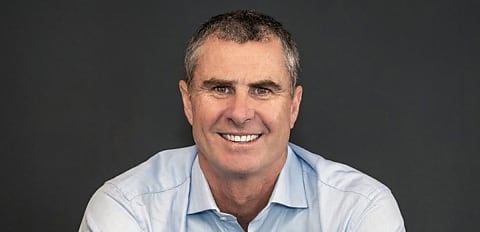
Banjo Loans CEO Guy Callaghan said the findings reflect a sector continuing to grow but with increased caution.
“The Compass Report highlights that SMEs are balancing growth ambitions with survival strategies. Inflation is the dominant pressure, while cash flow concerns are intensifying, forcing businesses to prioritise viability over expansion,” he said.
“And while inflation is clearly the dominant pressure shaping SME behaviour, cash flow pressures are intensifying for many. Many SMEs are prioritising viability and survival over growth.”
Cash flow pressures
The data also shows that many SMEs remain financially vulnerable. Half of Australian SMEs could run out of cash within six months if new revenue stopped today. While 69 per cent could survive at least three months without income, only 19 per cent could operate for more than a year.
Another survey by YouGov and the non-bank lender Prospa found that 42 per cent of SMEs hold two months or less of expenses in reserve, including 16 per cent with one month or less and 14 per cent with no reserves at all.
Additional pressures, such as Payday Super reforms and Australian Tax Office enforcement, are also weighing on SME confidence.
This vulnerability comes despite relatively strong trading conditions, with 69 per cent of SMEs achieving their revenue targets in 2025, up from 63 per cent in the financial year 2024, and 39 per cent exceeding expectations.
However, confidence is softening heading into 2026. Some 86 per cent of SMEs expect to meet revenue targets, down from 89 per cent, while long-term business confidence has declined from 77 per cent to 71 per cent.
Nationally, 83 per cent of SMEs said at least one business concern keeps them awake at night, most commonly inflation and rising costs, cash flow, and finding and retaining staff.
“Across Australia, SMEs continue to grow and hit revenue targets, but cash reserves remain tight, and uncertainty is high,” Callaghan said.
“The Compass data shows that SMEs are resilient but cautious and need to carefully manage finances as they navigate business in 2026.”
[Related: SMEs ‘getting ahead of the curve’ as credit demand holds firm]
 Want to see more stories from trusted news sources?
Make Broker Daily a preferred news source on Google.
