

By:

A flurry of high-profile developer collapses has sent shockwaves through the property sector, laying bare the brutal financial realities facing modern construction. Compounded by falling residential values that undermine project feasibilities and elevated interest rates that have dampened end-user demand, commercial capital operates in its most precarious environment in over a decade. In this climate, writing development debt is no longer just about securing a competitive rate—it is an exercise in intense risk mitigation and capital preservation.
For commercial brokers, the margin for error has vanished. As traditionally reliable funding channels tighten their criteria and valuer conservatism creates stark equity gaps, brokers must look beyond superficial term sheets to scrutinise lender liquidity and execution capability. Ensuring capital actually materialises when earthmovers hit the site has become the ultimate benchmark of deal viability.
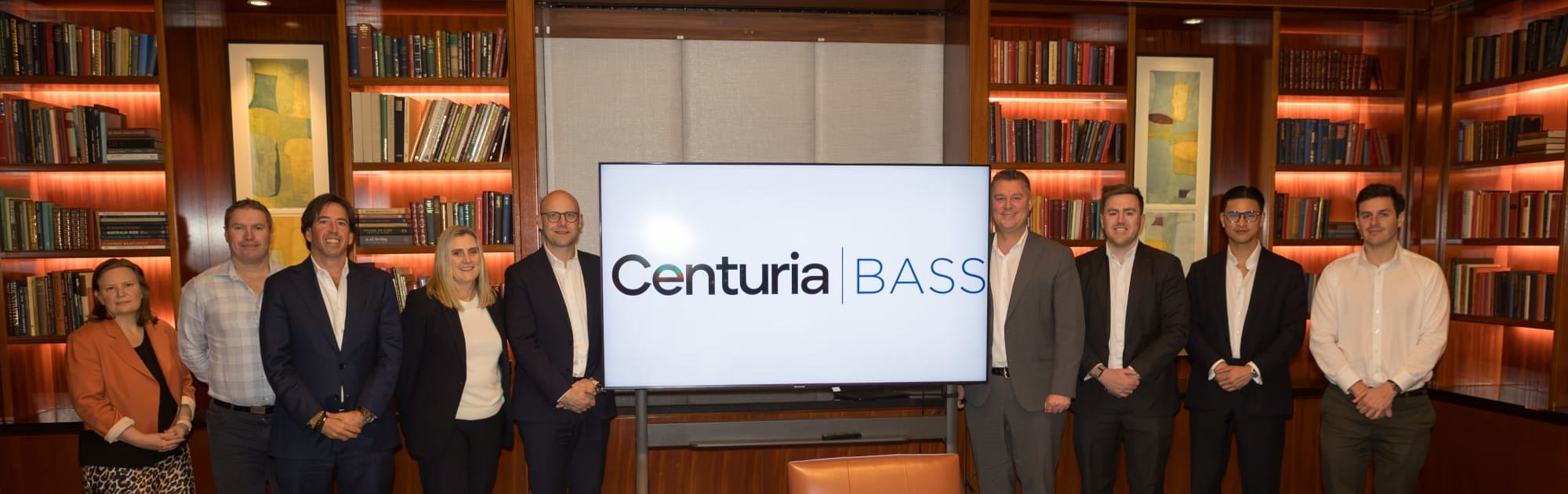
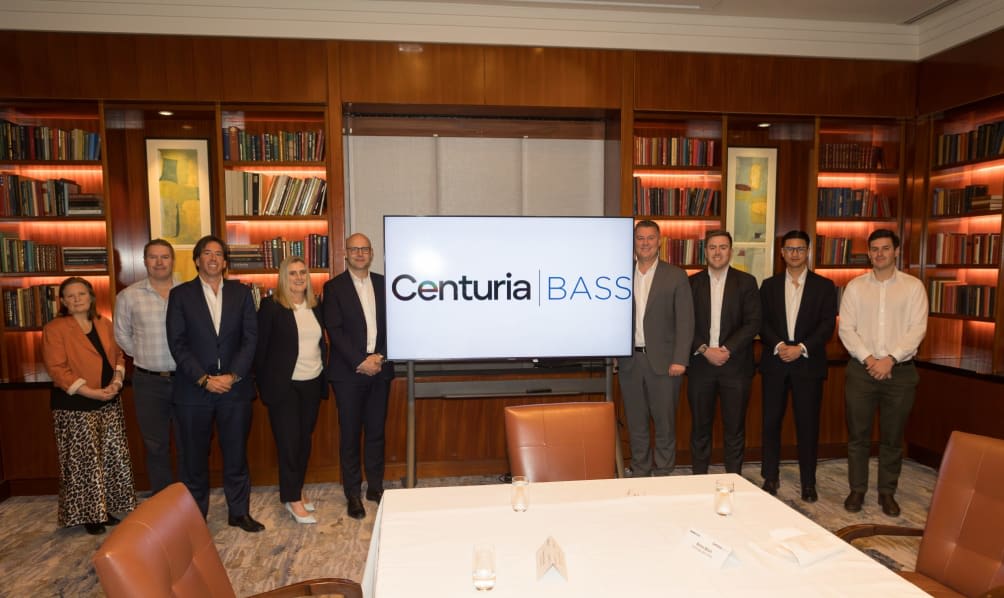
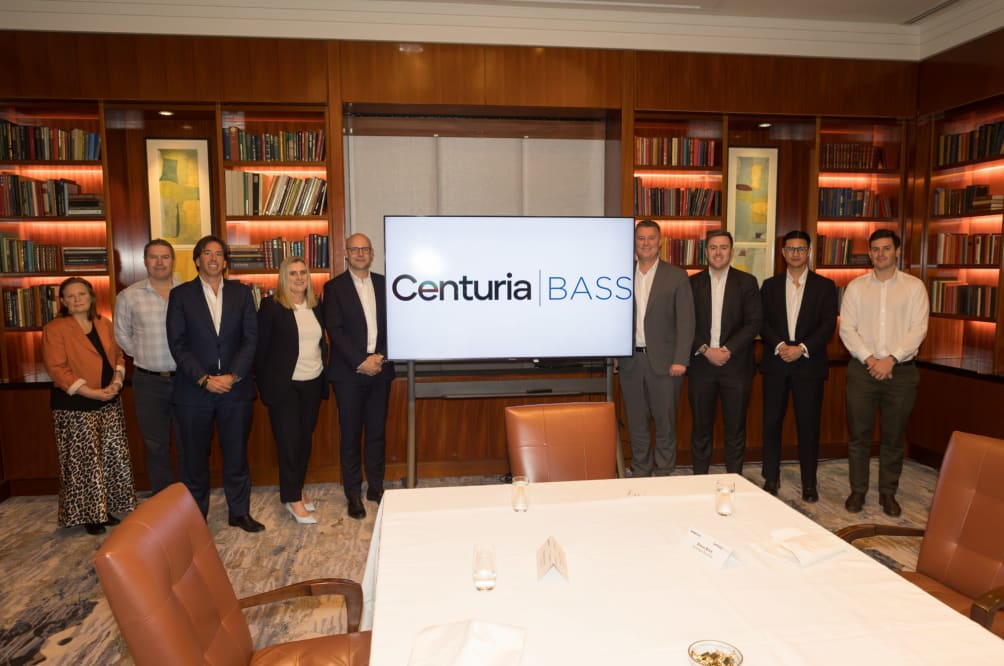
To examine how commercial brokers are steering clients through these headwinds, Broker Daily hosted an exclusive roundtable in September at the Park Hyatt Melbourne, co-hosted by non-bank specialist Centuria Bass.
Led by Managing Director and Head of Lending David Stone, the discussion brought together leading elite commercial finance brokers specialising in development debt:
Simon Birch (Sandridge Capital): A seasoned commercial capital specialist with extensive experience across national property cycles and debt structuring.
Angus Sheedy (Stamford Capital): A leading development finance adviser focused on feasibility stress-testing and securing capital certainty for complex projects.
Cameron Perry (MFEG): An experienced commercial debt strategist specialising in bespoke non-bank funding and alternative property asset classes.
Bobby Kennedy (Fathom Group): A dual development project manager and capital advisor with a strong focus on project delivery and structured finance.
Jacques Lo (DIG Capital Advisory): A private debt and capital advisory specialist focused on developer fundamentals and disciplined capital stack structures.
Kathy Johnson (Yarraport): A veteran capital advisor operating across East Coast markets with expertise in complex residential and commercial funding solutions.
The roundtable sought to understand the structural challenges that brokers are seeing in the property development space and how lenders, such as Centuria Bass, can support them in overcoming them.
The roundtable didn't shy away from the structural challenges stymying the Australian market. The commercial brokers all reported a critical market stalemate where escalating construction costs, pre-sale friction, and shifting valuations were eroding project feasibility.
Simon Birch, director at Sandridge Capital, specifically pointed to the friction caused by conservative and wide-ranging valuation methodologies holding back developments.
"I think the current market actually leads to a lot of opportunities but we're also seeing valuations that are probably the biggest pinch point to understand whether deals work or don't deal or don't work," Birch said.
"I think the current market actually leads to a lot of opportunities but we're also seeing valuations that are probably the biggest pinch point,"
— Simon Birch, director, Sandridge Capital
"And there's also a big variation between valuation and firms and that's something very critical that I'm seeing,” he said, adding that he recently had a $15 million difference in a valuation for a Queensland-based development. Part of the issue focused on whether the lender would include pre-sales in the end valuation.
Other issues plaguing valuations at the moment include the rapid change in property values, with some valuations firms having set higher valuations last year and who are now rapidly rebounding on those valuations to become more conservative.
Similarly, Jacques Lo from DIG Capital said he believed that valuations are currently coming in at the lowest they’ve been since 2020, particularly impacting the feasibility of developments that require a 67-70 per cent loan-to-value ratio lend but there has been compression of the land value.
“This means that while a project might have stacked up originally at 65 per cent, the conservative values and the escalations in construction costs means that these projects are now looking like a 75 per cent lend, or even pushing 80 per cent, which makes it much harder to finance.”
He continued: “Developers now are struggling to get pre-sales; they're struggling to get refinances, they're struggling to get residual stock loans. Essentially, they’re struggling to get a lot of good capital behind them because their feasibilities are just not working in Melbourne. This is where we’re spending a lot of time with our clients to find creative solutions.”
Rising costs and extended pre-sale timelines are also resulting in developer clients seeking alternative structures or moving into non-traditional asset classes to preserve project margins.
Cameron Perry from MFEG stated that getting standard residential numbers to stack up in Melbourne, where there is apartment oversupply, has forced a pivot:
"A big challenge for us has been that it's really hard to get a development type in Melbourne and get the numbers to work... Most of our longer-term clients are here, so we've been doing a lot of other types of funding. Land, residual stock, some of our developers have been looking at and moving into alternative type assets such as boarding houses, childcare centres, NDIS properties."
Lo added that the current climate is also changing who is in market, separating professional developers from part-timer speculators.
"I think the biggest thing we're seeing is that the days of the part-time developer are gone... we're seeing a disparity between your part-time developer and your developer who's trying the hardest, which is fair enough. And then your developers who know exactly what they're doing, who have the fundamentals correct," Lo noted.
"I think the biggest thing we're seeing is that the days of the part-time developer are gone"
— Jacques Lo, DIG Capital Advisory
To fill the gap and keep projects moving, brokers flagged that proving a complete delivery pathway is key to delivering a successful outcome.
Part of the value of a specialist development finance broker is knowing how to identify any potential warning signs and focusing on core execution fundamentals.
Bobby Kennedy of Fathom Group highlighted that brokers who can offer project management through their capital advisory during the delivery process add immense value: "It is a tough market out there. But one thing that we're doing that adds a lot of value in the finance process is being able to show up in the delivery pathway.”
He noted that Fathom had several projects in west Victoria where there were “questions around sales, questions around valuations, questions around liquidity in the market. But one thing that can calm that all down is if you have a clear plan of how you're actually going to deliver the asset and articulate that well to the lender. This should include everything from pre-sales to builder appointment to in-build, how you can manage variations and the back end etc,” he said.
“We’re able to succeed for our clients because we aren’t just going in with an evaluation and a construction contract, we’re offering a plan that runs from acquisition right the way through to settlement and exit, and that just gives financiers a lot of confidence in an uncertain time."
While the private credit market might seem flooded with options, brokers flagged that understanding where a lender's capital originates is vital to mitigating downside risk.
Indeed, the "credit risk" is no longer just on the borrower, but sometimes on the lender itself. Angus Sheedy emphasised that securing execution certainty is the primary challenge for borrowers today.
"I think the biggest thing is certainty for borrowers — that's the hardest thing in this market," Sheedy told the roundtable, noting the stop-start nature of some private lenders and limitations on investment funds at the moment.
"Sometimes go out to a lender tender with half a dozen lenders, but the market of lenders who are actually transacting is definitely narrowing down."
Kathy Johnson reinforced that understanding capital capacity is essential to avoid catastrophic late-stage failures: "What we're doing as capital advisors is really understanding who's got capacity at the moment and appetite to be in market... The last thing you want is to mandate a lender and then head down the path and then have something pulled at the 11th hour."
The roundtable panelists agreed that developers in 2026 are increasingly sophisticated about non-bank options, making lender reliability the ultimate differentiator.
For many brokers, knowing that a development finance loan can be written is just one piece of the puzzle. The other pieces include transparency, clarity of appetite, and direct engagement with credit decision-makers.
Cameron Perry noted that lender clarity makes a profound difference to broker execution: "What we really look for is clarity as to what the lender does. So where we want to ideally get to is within a pretty good degree of probability... we have a pretty good idea where that's best fit."
"I think the biggest thing is certainty for borrowers — that's the hardest thing in this market,"
— Angus Sheedy, Stamford Capital
Bobby Kennedy added that creative problem-solving and direct collaboration are what elevate a financier: "The thing that I'm really looking for at the moment, just because it makes my life a lot easier, is lenders who are a bit more creative in the way that they can structure a deal... The people that I call most often from financiers are the people that I can just brainstorm ideas with."
"The people that I call most often from financiers are the people that I can just brainstorm ideas with."
— Bobby Kennedy, Fathom Group
Centuria Bass Managing Director David Stone explained how lenders such as Centuria Bass can provide open communication and structural reliability in a shifting market.
"It's definitely an interesting time in private credit at the moment. There are obviously a number of challenges, whether it be liquidity, feasibility, construction costs, you name it," Stone outlined.
"In terms of the way that our capital is structured, we have a mix of private investors, warehouse funding, and we are supported well — we are an ASX-listed company, which means that we should be acting in a way that's open and transparent."
Stone concluded by reinforcing Centuria Bass's commitment to operating as an open, reliable capital partner for the broker network:
"We realise that there are liquidity constraints in the market at the moment, and I'd like to think that the team is open and honest with brokers from the onset about whether an opportunity is one that we can support, which speaks to transparency and reliability."
"I'd like to think that the team is open and honest with brokers from the onset about whether an opportunity is one that we can support."
— David Stone, managing director and head of lending, Centuria Bass
Broker Q&A:

Simon Birch (Sandridge Capital):
"What attracts us most to a lender when we're looking to fulfil a certain requirement will depend on what's needed by the particular client... But what we really value in any lender is having experienced people that we have access to and talk to day to day. Those that are able to understand the nuances and work with you and they're responsive and they're honest. That's a must."

Angus Sheedy (Stamford Capital):
"Track record is super important... as is setting expectations. Things are changing rapidly and the last thing that all of us want to do is say that we can get something and it doesn't happen."

Cameron Perry (MFEG):
"What we really look for is clarity as to what the lender does. But we also want to know where a deal is at and the internal process. From our point of view, it's really damaging when a deal just gets stuck in the system and you don't know what to do or who's looking at it, or what we need to do to push it along."

Bobby Kennedy (Fathom Group):
"I want someone that I can call up and brainstorm a scenario with. I think the people that I call most often from financiers are the people that I can just brainstorm ideas. If we can bounce ideas back and forth and can find a solution that's really valuable to me."

Jacques Lo (DIG Capital Advisory):
"I would say certainty and honesty... Be honest about your weight of capital. Tell us exactly what projects you're looking for, what you want and how that's going to be funded. And at the same token, be certain about it... Be certain about where your capital is coming from, when you can deliver and how you can deliver."
Kathy Johnson (Yarraport):
"What we really value in any lender is having experienced people that we have access to. We work with those we've got a track record with who are able to get things done in a way that is as least painful as possible."